
Most homeowners never think about the straps and anchors under their home until something feels off inside it. A door starts sticking. A floor develops a slope you can feel in your feet. A window that always closed easily suddenly does not.
Those are interior symptoms of an exterior problem. When tie downs loosen and anchors lose their hold, the home settles unevenly, and the floor system is what carries the strain.
What Tie Downs and Anchors Actually Do
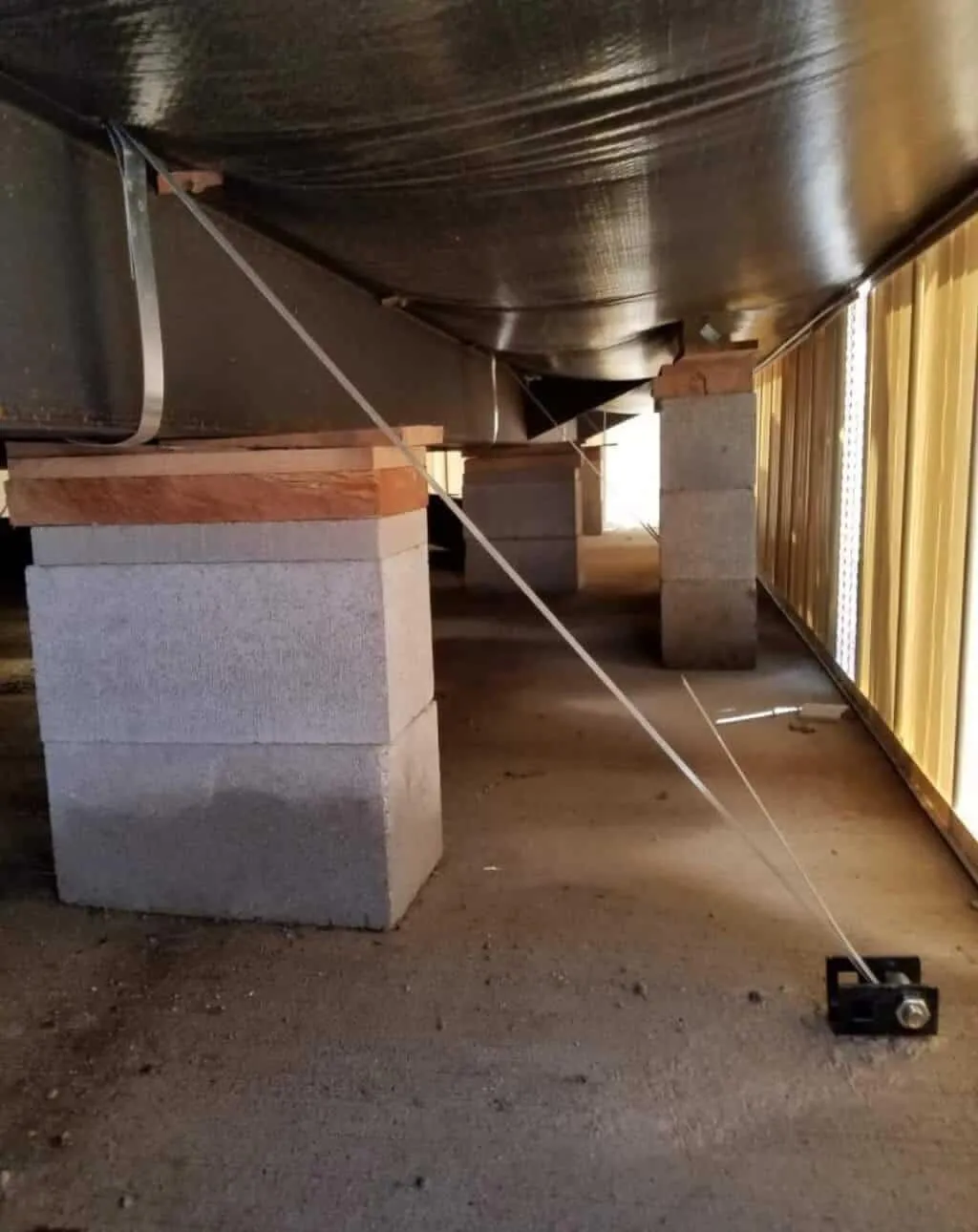
A mobile home is not poured into the ground. It sits on piers, and it is held to the earth by steel straps that run over or around the frame and connect to anchors driven into the soil.
The anchors resist uplift and sliding. The straps keep the home tied to those anchors under wind load. Together they are the reason a manufactured home stays put in a storm instead of shifting on its piers.
They also quietly help keep the home stable and level day to day. When they slacken, the home is free to move in small amounts, over and over.
Why Florida Soil Works Against Anchors
Anchor holding power depends entirely on the soil around it. Florida gives anchors some of the hardest ground conditions in the country to work with.
Sandy soil is loose by nature. It does not grip an anchor the way dense clay does, and it shifts more easily when saturated.
Then comes the water. Heavy summer rain soaks the ground, softens it, and lets anchors work themselves loose. When the ground dries out, it shrinks back and leaves the anchor sitting in soil that no longer holds it tight.
That wet and dry cycle repeats every year. Each round costs an anchor a little more of its grip.
Storm Winds Finish the Job
Wind does not have to reach hurricane strength to matter. Regular afternoon storms push and pull on a home over and over.
Each gust puts tension on the straps. Tension pulls on the anchor. In loose, wet soil, that pull gradually lifts the anchor head or widens the hole around it.
By the end of a long storm season, straps that were tight in spring can have visible slack in them.
Signs Your Home Has Shifted
You will usually notice the effects inside before you spot anything outside.
Doors and windows that stick or swing open on their own are common early clues. So are new cracks where walls meet ceilings, and gaps opening around trim.
The floor itself is the biggest tell. A slope you can feel when you walk, a spot that bounces, or furniture that no longer sits square all point to a frame that is no longer sitting evenly on its supports.
Outside, look for straps with visible slack, rusted buckles, or anchor heads that sit at an angle instead of straight in the ground. Our leveling questions and answers walk through more of what homeowners commonly notice.
How Loose Tie Downs Damage Your Floors
This is the part that surprises people. Anchors are under the home, so it seems like a foundation issue and nothing more.
But when a home is out of level, its weight stops sitting evenly across the piers. Some sections of the frame carry more load than they were built to carry.
The subfloor decking above that frame flexes to absorb it. Seams open. Fasteners pull loose. Areas that were solid start to feel soft and springy underfoot, even with no water involved.
Add Florida humidity to a floor with open seams and the damage accelerates. Moisture finds those gaps, gets into the decking, and now you have a structural problem and a moisture problem at once.
Why the Floor and the Anchors Get Fixed Together
Replacing decking in a home that is still out of level is a short-term fix. The frame keeps flexing, and the new floor takes the same punishment the old one did.
The right sequence is to get the home level and properly secured first, then address the floor. That way the new decking sits on a stable, evenly supported frame from day one.
We handle leveling and anchor work alongside mobile home flooring and subfloor repair, which means the structure and the floor get solved in the same visit instead of two disconnected jobs. You can see how that plays out on our completed projects.
What a Tie Down Inspection Involves
An inspection starts under the home, not inside it. Every strap gets checked for slack, rust, and proper routing over the frame.
Anchors are checked for depth, angle, and hold. An anchor leaning out of the ground has already lost most of its value, no matter how tight the strap on it looks.
The home gets checked for level at the piers, since shifting anchors and settling piers often happen together. Any soft or bouncing areas in the floor above are noted, because they usually line up with the sections carrying uneven load.
Because the underside of the home is already open during this work, it is a natural time to look at the vapor barrier and belly wrap. A torn barrier lets ground moisture into the same floor system the anchors are supposed to be protecting.
The Right Time to Check Is Before the Next Storm
Anchors do not announce themselves. They loosen slowly, and the home compensates until it cannot.
The worst time to find out your tie downs are loose is during a storm, when they are being asked to do the exact job they can no longer do. The best time is well ahead of one, when a strap can simply be tightened or an anchor reset.
Homeowners in Hillsborough, Pinellas, and the surrounding counties deal with the same sandy soil and the same rainy season, so this is worth checking on any home that has been in place for years.
Get Your Tie Downs and Floors Looked At
If doors are sticking, floors feel uneven, or you have not looked under your home in a long time, it costs nothing to find out where things stand.
We check the anchors, the level, and the floor system together, then tell you plainly what needs attention and what does not. Reach out through our contact page to schedule a free inspection before the next round of storms rolls through.