
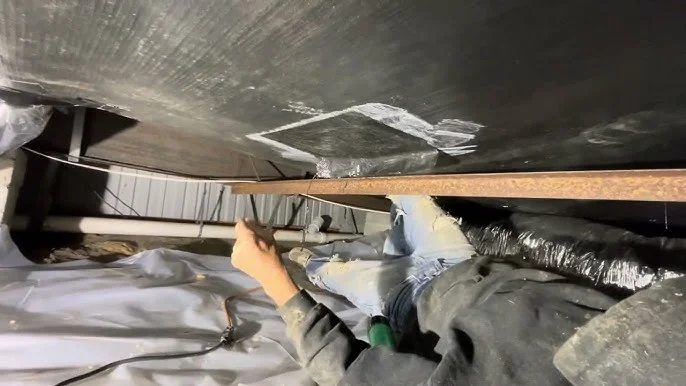
You clean, you air the place out, and by the next day the smell has settled right back in. A musty smell in a mobile home tends to hang on like that because most people keep treating the room instead of the thing causing it.
The odor is in the air you breathe, but the source of it is almost always down below the floor, where you never think to look.
Where a Musty Smell in a Mobile Home Really Starts
Musty odor is the smell of moisture and the mildew that grows in it. In a manufactured home, the space that stays damp and dark enough for that is the belly, the enclosed area between your floor and the ground.
A barrier down there is meant to keep ground moisture out. Once it tears or sags, damp air drifts up into the insulation and decking and finally into the rooms you live in, which is the smell you keep chasing. No amount of cleaning upstairs gets anywhere near it.
Why Florida Makes It Worse
The ground here holds water and the air holds even more, so mildew almost never runs short of what it needs. The rainy season is the hardest stretch, when weeks of afternoon storms leave the soil under the home soaked and the belly damp.
A small tear in the barrier might cause no trouble in a dry climate. Sitting in Florida humidity, that same tear becomes a steady source of odor. Our look at the rainy season and your subfloor covers why this time of year is when it usually surfaces.
The Belly Wrap and Vapor Barrier
The wrap along the bottom of the home and the barrier above it are your defense against everything the ground gives off. When one of them fails, the entire floor system is left open to it.
A failed vapor barrier lets in more than odor. The same moisture carrying that smell is what softens decking and rots floors, so a musty room is often the first sign of something bigger already underway.
Plumbing Leaks You Cannot See
A slow drip under a sink or behind a wall can feed mildew for months without leaving a puddle anyone would notice. You smell it long before you ever find the leak.
Leaks like that usually sit right next to floor water damage, because the water soaking your decking is the same water feeding the odor above it.
Why Air Fresheners Never Win
Sprays and candles cover the smell for an hour, then it comes back, because the moisture underneath is still making more of it. You end up masking the symptom while the cause carries on.
A dehumidifier helps the air in the rooms but cannot reach the belly where the trouble actually is. As long as that space stays wet, so does the smell. Clearing it for good comes down to finding the moisture and stopping it.
Other Clues That Point Underneath
The smell rarely shows up on its own. Once you know to connect it to what is below, the other signs start to make sense together.
Soft or spongy spots in the floor, condensation on the windows, a room that always feels damp, or humidity that stays high even with the air running all point the same way. When a few of those turn up at once, the belly is holding moisture it shouldn’t be.
How the Source Gets Fixed
It starts underneath, with a look at the barrier, the belly wrap, and the decking above them for tears, sagging, standing moisture, or a leak feeding the space. Everything else depends on finding that source first.
From there the barrier gets repaired or replaced, the wet insulation comes out, and any damaged decking is dealt with, so the moisture no longer has anywhere to sit. With it gone, the air upstairs finally has a chance to dry out.
Since the underside is already open at that point, it’s the natural time to check the underbelly and its wrap as a whole. You can see this kind of moisture work on our completed projects.
Why the Smell Is Worth Acting On
A musty odor is easy to live with and easy to put off, but it usually means moisture is already working on your floor. Left alone, that moisture softens the decking and brings on rot, and a smell you could have ignored becomes a repair you can’t. It’s far easier to catch at the odor stage than after the floor has gone soft.
Clear the Air by Fixing the Cause
If your home smells damp no matter what you try, the answer is under the floor, and it can be put right. Find the moisture, stop it, and the rest follows.
We handle moisture and subfloor repair across Florida, starting at the root rather than the room. Reach out through our contact page to schedule a free inspection.